Owning a pool comes with advice. Lots of it.
A neighbor has a strong opinion. A coworker recommends a routine. A Facebook group argues over what everyone should do. A relative says their way is the only way. A contractor uses different language than a pool technician. A friend sends a link after one conversation at a cookout.
Before long, a simple backyard question can turn into a dozen competing answers.
This is where many pool owners get stuck. They are not lazy or careless. They are overwhelmed. Every suggestion sounds confident. Every person seems sure. Every thread has someone saying, “You have to do this.”
But a pool is not managed well by panic or peer pressure.
A better approach is to build an advice filter. It helps you slow down, sort information, and make decisions based on your actual pool, yard, climate, schedule, and household habits.
First, Know Where the Advice Comes From
Not all advice has the same value. A neighbor may know your local weather patterns well. A technician may understand equipment better. A parent may know what works for a busy family. A social media thread may offer ideas, but it may also include people with very different pools and climates.
Before accepting any advice, ask where it comes from.
Is the person speaking from experience with a similar pool? Are they describing a one-time fix? Are they repeating something they heard? Are they trying to solve the same problem you have?
Context matters.
A tip that works for a screened-in Florida pool may not fit a windy backyard in Arizona. A routine that works for a retired couple may not fit a family with four kids and a dog.
Advice needs translation before it becomes action.
Separate Problems From Solutions
Many pool conversations jump straight to solutions. Someone says you need a new tool, a different schedule, another test, a service call, or a complete change in routine.
Slow down.
Write the actual problem first.
Is the pool getting leaves after windy days? Are towels taking over the patio? Are kids leaving toys in the water? Is the deck cluttered? Is the waterline collecting pollen? Is the issue seasonal, weekly, or constant?
Once the problem is clear, solutions become easier to judge.
Without a clear problem, every suggestion sounds equally urgent.
A good pool owner learns to name the issue before chasing the fix.
Create a Backyard Decision Note
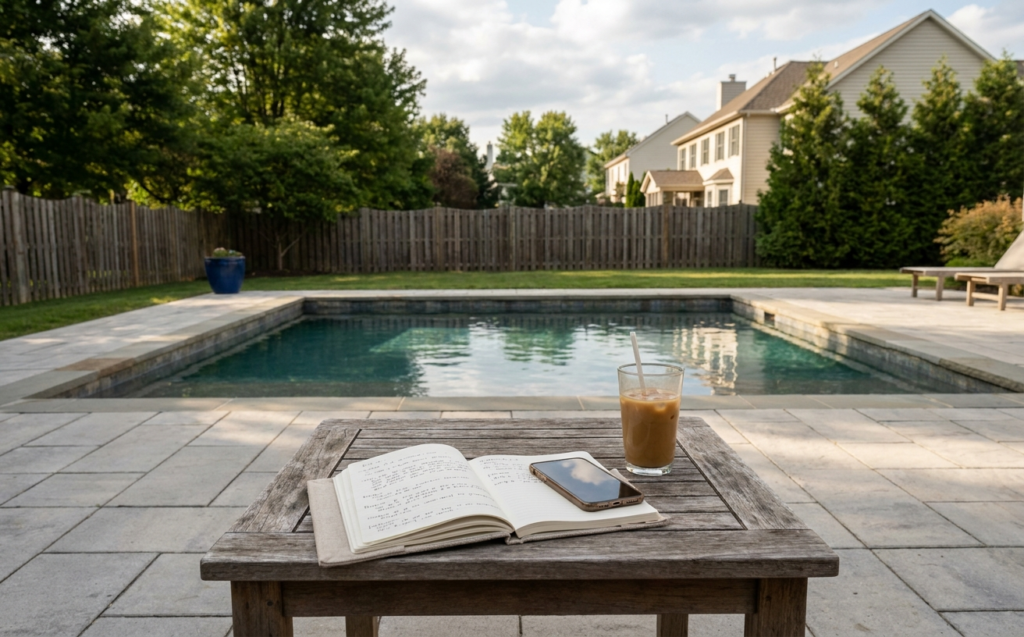
A backyard decision note can save you from scattered thinking. It can live in your phone, home binder, or shared household notes.
Use it to capture advice before acting on it.
Create sections like:
- Problem we are noticing
- Advice received
- Who suggested it
- What applies to our yard
- What needs more research
- What can wait
- Decision made
This sounds simple, but it prevents advice from living in your head all week.
It also helps you avoid making decisions while standing in the sun, frustrated by leaves, with three people giving opinions at once.
A note gives the topic a place to cool down.
Save Search Terms With Context
Sometimes advice leads to a search phrase. That is fine, but search phrases should not become decisions by themselves.
Save them with context.
For example, a homeowner may write shop pool cleaners in a backyard decision note beside questions about workload, yard debris, household schedule, storage space, and whether the issue is frequent enough to justify changing the routine.
That keeps the phrase in perspective.
It is not a command. It is a research item.
The difference matters because a calm research note supports better choices than a late-night search spiral.
Watch for Advice That Solves Someone Else’s Problem
A lot of advice is not wrong. It is just not yours.
Your neighbor may have a huge oak tree. You may not. Your cousin may host every weekend. You may use the pool mostly on weeknights. Someone online may fight constant dust. Your real issue may be towel clutter and kids leaving toys everywhere.
When someone gives advice, ask: does this solve my actual problem?
If not, thank them and move on.
You do not need to adopt every strong opinion. You only need a system that fits your home.
Pool ownership gets easier when you stop collecting solutions for problems you do not have.
Do Not Change Everything at Once
Advice overload often leads to overcorrection. A homeowner hears too many suggestions and decides to change the entire routine.
That can create new confusion.
Change one thing at a time.
Try a new towel system for two weeks. Adjust the swim schedule. Move the toy bin. Change the time you check the pool after windy days. Update the storage area.
Then observe.
Did it help? Did it create more work? Did the family follow it? Did it solve the actual issue?
Small changes produce clearer results.
Big changes make it hard to know what worked.
Consider the Household, Not Just the Pool
Some advice focuses only on the water, but pool life includes the whole household.
A routine has to fit laundry, kids, pets, work schedules, guests, storage, weather, and the layout of the house.
A perfect technical plan may fail if nobody has time to follow it. A simple family habit may work better than a complex system nobody uses.
Before acting on advice, ask who will maintain the change.
If the answer is always one person, the routine may not be sustainable.
A pool is a household feature. The solution should fit the household.
Be Careful With Urgency
Some advice sounds urgent even when the issue is not. Online comments can make small problems feel like emergencies. A neighbor may speak from one bad experience. A salesperson may make a routine change sound immediate.
Urgency should be earned.
If something affects safety, handle it quickly. If something is damaging equipment or creating a serious issue, take it seriously. But if the topic is comfort, convenience, or routine improvement, you probably have time to think.
Most pool decisions do not need to happen in the next ten minutes.
A slower choice is often a better choice.
Keep a “Maybe Later” List
Not every idea needs a yes or no right away. Some belong in a “maybe later” list.
This is where you put advice that sounds interesting but not urgent.
Maybe later items might include storage upgrades, furniture changes, shade ideas, maintenance schedule changes, or equipment research.
Review the list monthly or seasonally.
If an idea still seems useful after time passes, consider it. If it no longer matters, delete it.
A maybe list protects your attention.
It lets you hold ideas without letting them run the household.
Ask Better Follow-Up Questions
When someone gives advice, ask follow-up questions before accepting it.
Try:
- What problem did this solve for you?
- How often did you have that issue?
- Was it seasonal or year-round?
- How much time did it actually save?
- Did your family keep using the system?
- What would you do differently now?
These questions reveal whether the advice has depth.
They also make the conversation more useful.
A confident recommendation is less valuable than a clear explanation.
Trust Your Own Observations
After a season or two, you will know things about your pool that nobody else knows as well.
You will know where leaves collect. You will know which side gets hot. You will know when kids actually swim. You will know which chores get ignored. You will know what your family will and will not do.
That knowledge is valuable.
Do not dismiss it because someone else sounds more experienced.
Good pool ownership combines outside input with local observation.
Your backyard is the final source of truth.
Advice Should Make Pool Life Clearer
The purpose of pool advice should be clarity. If advice makes you feel more confused, pressured, or behind, step back.
You do not need every tip.
You need the right few.
A decision note, clear problem statement, maybe later list, and one-change-at-a-time approach can make advice easier to handle.
The pool does not need to become a full-time research project. It needs practical routines that fit your home.
When advice is filtered well, it stops feeling like noise.
It becomes useful information, and the backyard becomes easier to enjoy.